
ENTERTAINMENT NEWS

U.S. Army captures a boat in Ve…See more

U.S. Military Intercepts Vessel During Routine Maritime Security Operation

A developing security incident involving U.S. military forces has drawn attention across defense, national security, and global affairs communities, highlighting the growing importance of maritime surveillance in an increasingly complex geopolitical environment.

According to early statements from U.S. defense sources, American forces intercepted and secured a vessel during a coordinated operation conducted in a sensitive maritime zone. While speculation quickly spread across social media platforms, officials emphasized that the action was part of a routine security mission focused on maintaining regional stability and protecting international waterways.

At this stage, authorities have released only limited verified information, urging the public and media outlets to avoid drawing conclusions until official assessments are complete.

What Has Been Officially Confirmed
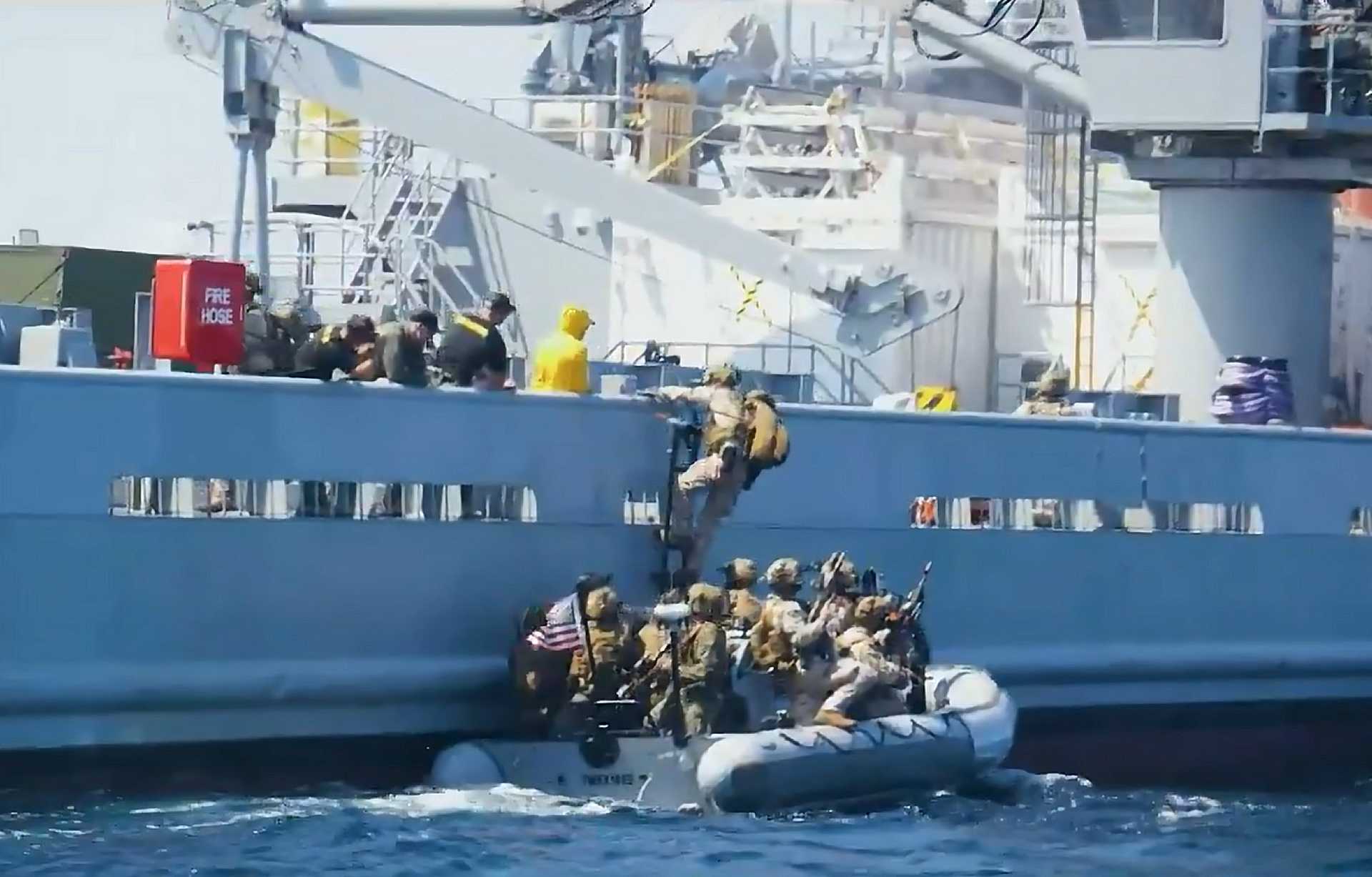
U.S. Marines in Caribbean Sea Conduct Maritime Interdiction Training as U.S. Pressure Grows on Shipping

Defense officials have been careful to outline what is known without disclosing operationally sensitive details.

They confirmed that U.S. forces carried out a controlled interception of a vessel deemed relevant to ongoing maritime security monitoring. The operation concluded without escalation, and authorities stated that no civilians were harmed during the process.

Beyond these points, officials have not provided specifics regarding the vessel’s origin, ownership, or cargo. They also declined to confirm whether any individuals were detained, citing standard protocol during active reviews.

This measured communication reflects a broader shift in defense messaging aimed at preventing misinformation during unfolding events.

Why Maritime Interceptions Are Not Unusual

r/WarshipPorn - Sailors aboard the Cyclone-class patrol coastal ship USS Zephyr (PC-8) conduct ship-to-ship firefighting to extinguish a fire aboard a low-profile go-fast drug vessel suspected of smuggling in international waters of the eastern Pacific Ocean. Apr. 2018. USN photo. [4826 x 3729]

Defense analysts note that such interceptions are a routine component of modern naval operations. Global shipping lanes are increasingly monitored due to concerns over illegal trafficking, sanctions evasion, unregulated fishing, and the movement of prohibited materials.

The U.S. military, along with allied forces, conducts regular patrols to identify and assess vessels exhibiting irregular patterns or behaviors that warrant further inspection.

These operations are designed to deter unlawful activity and ensure the safety of international trade routes that support the global economy.

Rising Attention to Global Waterways

Maritime zones have become central to international security discussions in recent years. A significant portion of global trade moves by sea, making shipping lanes critical infrastructure that must be protected.

As geopolitical tensions rise in multiple regions, naval forces are increasingly tasked with balancing deterrence, surveillance, and de-escalation. Interceptions like this one reflect ongoing efforts to maintain stability without provoking confrontation.

Security experts emphasize that these missions are often preventative rather than reactive, aimed at identifying risks before they escalate into broader conflicts.

What Authorities Have Not Disclosed

USS Gravely and U.S. Coast Guard Conduct Drug Interdiction in Caribbean Sea > United States Navy > display-pressreleases

Officials have clearly stated that several key details remain undisclosed at this time. These include the precise location of the interception, the identity or registration of the vessel, the nature of any cargo aboard, and whether legal action followed the operation.

Such restraint is common in security matters, where premature disclosure can compromise investigations or reveal sensitive capabilities.

Defense agencies typically release additional information only after internal reviews confirm that doing so will not affect operational security or diplomatic considerations.

The Role of Social Media in Shaping Perception

Despite limited confirmed details, the incident quickly became the subject of online speculation. Social media posts and unverified claims circulated widely, often attaching specific locations or motives without evidence.

Experts warn that viral narratives can distort public understanding, particularly in the context of national security. Incomplete or misleading information can heighten anxiety and fuel unnecessary political or economic reactions.

Defense analysts stress the importance of relying on official channels and verified reporting when assessing such incidents.

Why Experts Urge Caution

Pentagon Provides Update on Operation Southern Spear, Reaffirms Socom Called for Second Strike on Drug Boat > U.S. Department of War > Defense Department News | U.S. Department of War

International law and defense policy specialists consistently advise caution when interpreting early reports of military activity.

They note that maritime interceptions occur across the globe on a regular basis and do not necessarily signal conflict or escalation. Many are conducted quietly and conclude without further action once vessels are assessed.

Jumping to conclusions based on fragmentary information can misrepresent the intent and outcome of standard security procedures.

The Broader Context of Maritime Security

From a strategic perspective, incidents like this underscore why maritime surveillance remains a high priority for defense planners.

Advances in tracking technology, intelligence-sharing agreements, and naval readiness have expanded the ability of military forces to monitor activity across vast ocean regions.

This capability plays a critical role in enforcing international regulations, preventing illicit trade, and responding to emerging threats without resorting to force.

Economic and Strategic Implications

Maritime security is closely tied to economic stability. Disruptions to shipping lanes can affect energy markets, supply chains, and global commerce.

As a result, industries connected to defense, cybersecurity, logistics, and international trade closely monitor developments involving naval operations.

Even routine interceptions can influence market sentiment, underscoring the importance of clear communication from defense authorities.

Defense Spending and Readiness

Trump Boasts of Strike on “Drug-Carrying Boat” From Venezuela

Security experts point out that events like this help explain sustained investment in naval capabilities and intelligence infrastructure.

Maintaining readiness requires significant resources, but it allows military forces to respond effectively to potential risks without escalating tensions.

This balance between preparedness and restraint is a defining feature of contemporary defense strategy.

Why Transparency Has Limits

While public interest in military operations is understandable, experts acknowledge that full transparency is not always possible in real time.

Certain details must remain confidential to protect personnel, preserve diplomatic relationships, and ensure the effectiveness of future missions.

Authorities often release more comprehensive information after operational reviews are complete, when risks associated with disclosure are reduced.

What Happens Next

Defense officials have indicated that assessments are ongoing and that verified updates will be shared through formal channels as appropriate.

These updates typically follow internal evaluations, coordination with international partners, and legal reviews when applicable.

Until then, analysts recommend patience and reliance on confirmed statements rather than speculation.

The Takeaway for the Public

Not every maritime interception signals an impending conflict. Many are part of routine efforts to maintain security in a complex global environment.

However, each operation serves as a reminder of how closely monitored and strategically important global waterways have become.

In an era of rapid information sharing, measured interpretation is essential.

A Reflection of a Fragile Balance

The incident illustrates the delicate balance between vigilance and stability that defines modern maritime security.

While the situation was resolved without escalation, it highlights ongoing challenges faced by military and civilian authorities tasked with safeguarding international routes.

As global dynamics continue to evolve, such operations are likely to remain a regular, if often misunderstood, aspect of maintaining order at sea.

Waiting for Verified Information

As officials continue to review the incident, experts emphasize the importance of grounding discussions in confirmed facts.

Verified updates, when released, will provide greater clarity on the circumstances and outcomes of the operation.

Until then, this event stands as an example of how routine security measures can quickly draw widespread attention in a world where information travels faster than verification.
U.S. Army captures a boat in Ve…See more Read More

IRAN ATTACKED RIGHT NOW, PLANE WITH MORE THAN 244 ONBOARD JUST CRASH… see more

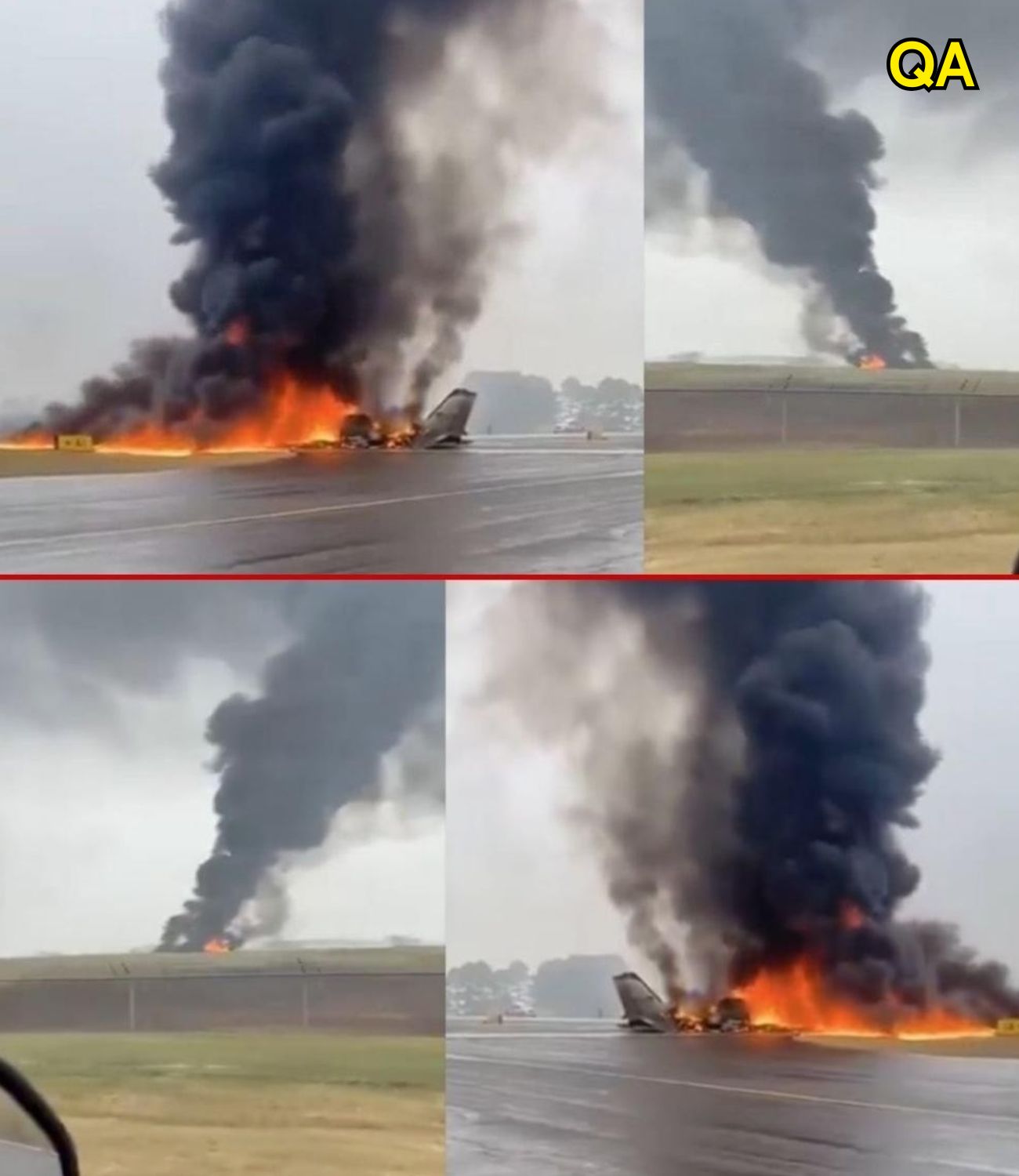
Louisville, Kentucky — Federal investigators and local authorities are continuing to examine the cause of a UPS cargo plane crash at Louisville Muhammad Ali International Airport, which left at least 14 people confirmed dead and several others injured. Officials have moved from rescue to recovery operations as the investigation enters its second full day.

The Crash and Immediate Response

Officials believe death toll after Kentucky UPS plane crash will stand at 14 - ABC News

The incident occurred around 5:15 p.m. Tuesday, when a UPS MD-11 aircraft experienced catastrophic failure during takeoff. The plane, bound for Honolulu, Hawaii, was carrying standard freight and approximately 38,000 gallons of jet fuel, according to aviation officials.

Witnesses reported seeing the aircraft struggling to gain altitude before descending near the runway area. Two nearby businesses, Kentucky Petroleum Recycling and Grade A Auto Parts, sustained significant structural damage. Emergency crews from Louisville Metro FireKentucky National Guard, and airport emergency services responded within minutes.

Governor Andy Beshear declared a state of emergency Tuesday evening to accelerate deployment of state resources and opened the Kentucky Emergency Relief Fund to assist with funerals, response costs, and rebuilding.

Confirmed Victims and Injuries

UPS Plane's Engine Detached Before Deadly Louisville Crash, Official Says - The New York Times

UPS has identified the three crew members on board:

  • Captain Richard Wartenberg, Independence, Kentucky

  • First Officer Lee Truitt

  • International Relief Officer Captain Dana Diamond

All three perished in the accident. Authorities have also confirmed additional casualties from the surrounding industrial area. As of Wednesday morning:

  • 14 fatalities confirmed

  • 15 people injured, with two in critical condition

  • 9 individuals remain unaccounted for

Family-assistance and reunification services have been established at the Louisville Metro Police Training Academy on Taylor Boulevard.

The Airport Situation

Officials believe death toll after Kentucky UPS plane crash will stand at 14 - ABC News

Operations at Louisville Muhammad Ali International Airport were temporarily halted following the crash. Two of the airport’s runways have since reopened, but flight delays and cancellations continue. Officials advise travelers to check directly with airlines for updated schedules.

Airport spokesperson Natalie Hughes stated that safety inspections are ongoing:

“Our primary focus remains the well-being of affected families, our employees, and ensuring all runways meet operational safety standards before full reopening.”

Investigation Underway

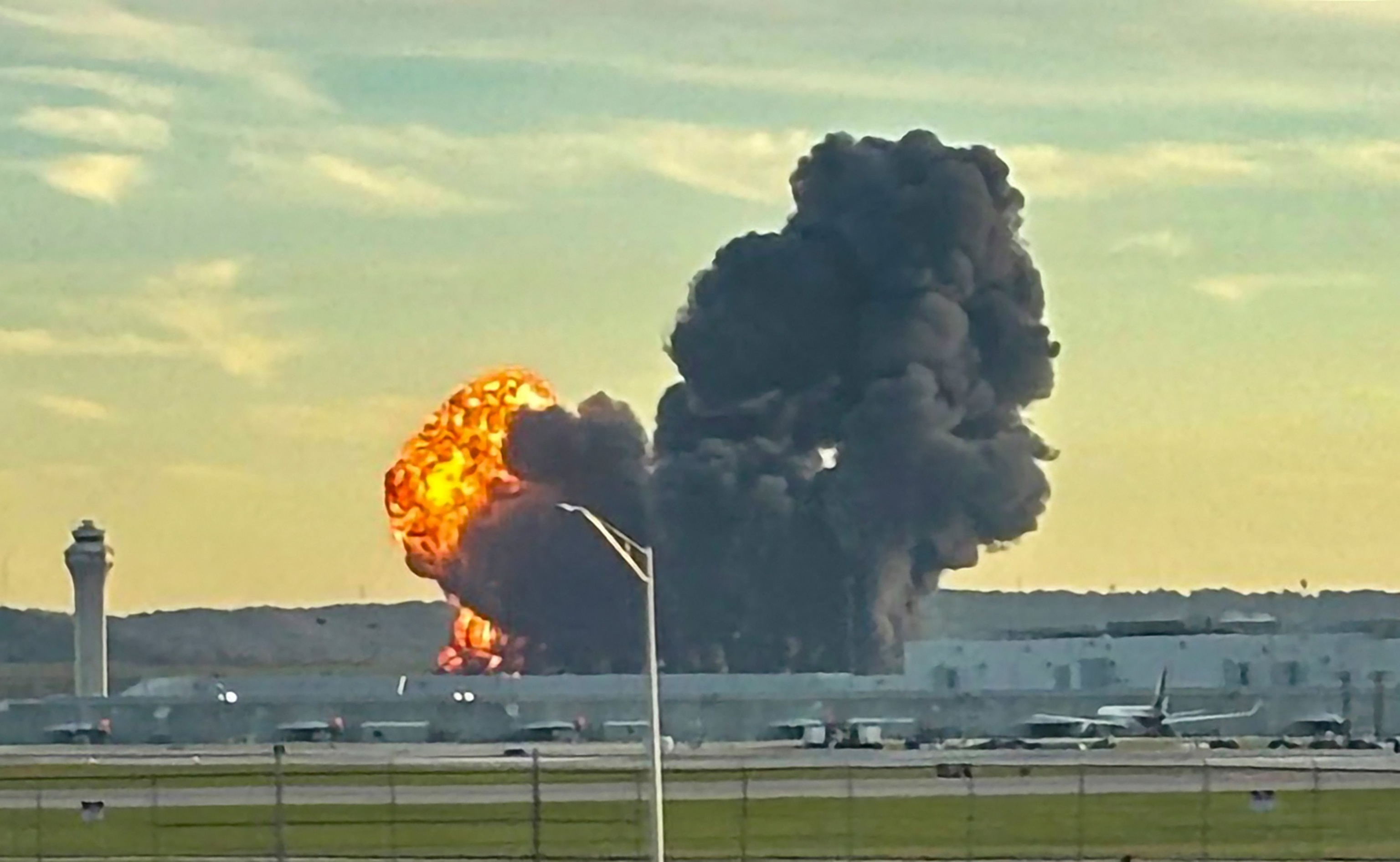
Massive explosion from a UPS cargo plane crash near Louisville Muhammad Ali International Airport.

The National Transportation Safety Board (NTSB) and Federal Aviation Administration (FAA) are leading the investigation. The aircraft’s cockpit voice recorder and flight-data recorder—commonly known as black boxes—have been recovered and transported to a laboratory in Washington, D.C., for analysis.

NTSB officials confirmed that no hazardous materials were listed in the cargo manifest, though the fuel load contributed to extensive secondary fires that complicated initial rescue efforts. Investigators will now focus on mechanical performance, maintenance records, and flight-crew communications leading up to the crash.

According to Flightradar24, the final recorded data from the aircraft showed a ground speed of approximately 184 knots (211 mph) at low altitude. While this information provides context, investigators stress that determining cause will require weeks of technical review.

Local and Federal Response

A massive fireball and thick black smoke rising from a cargo plane crash in Louisville, Kentucky.

Dozens of agencies are assisting with site containment and cleanup, including:

  • Louisville Metro Police Department

  • Louisville Fire and EMS

  • Kentucky State Police

  • Louisville Emergency Management Agency

  • U.S. National Guard units

Governor Beshear emphasized gratitude for first responders, many of whom worked overnight in challenging conditions. “Kentucky stands with every family affected by this tragedy,” he said during a briefing.

Statements from Leaders

Kentucky’s congressional delegation and national leaders offered condolences Tuesday night.

U.S. Senator Mitch McConnell:

“My team and I are closely monitoring developments around the Louisville airport and remain in contact with local, state, and federal authorities. We extend deep thanks to the first responders for their swift and selfless action.”

Senator Rand Paul and Representative Thomas Massie also expressed sympathies, urging residents to follow official updates and avoid speculation until federal investigators release verified findings.

Impact on the Community

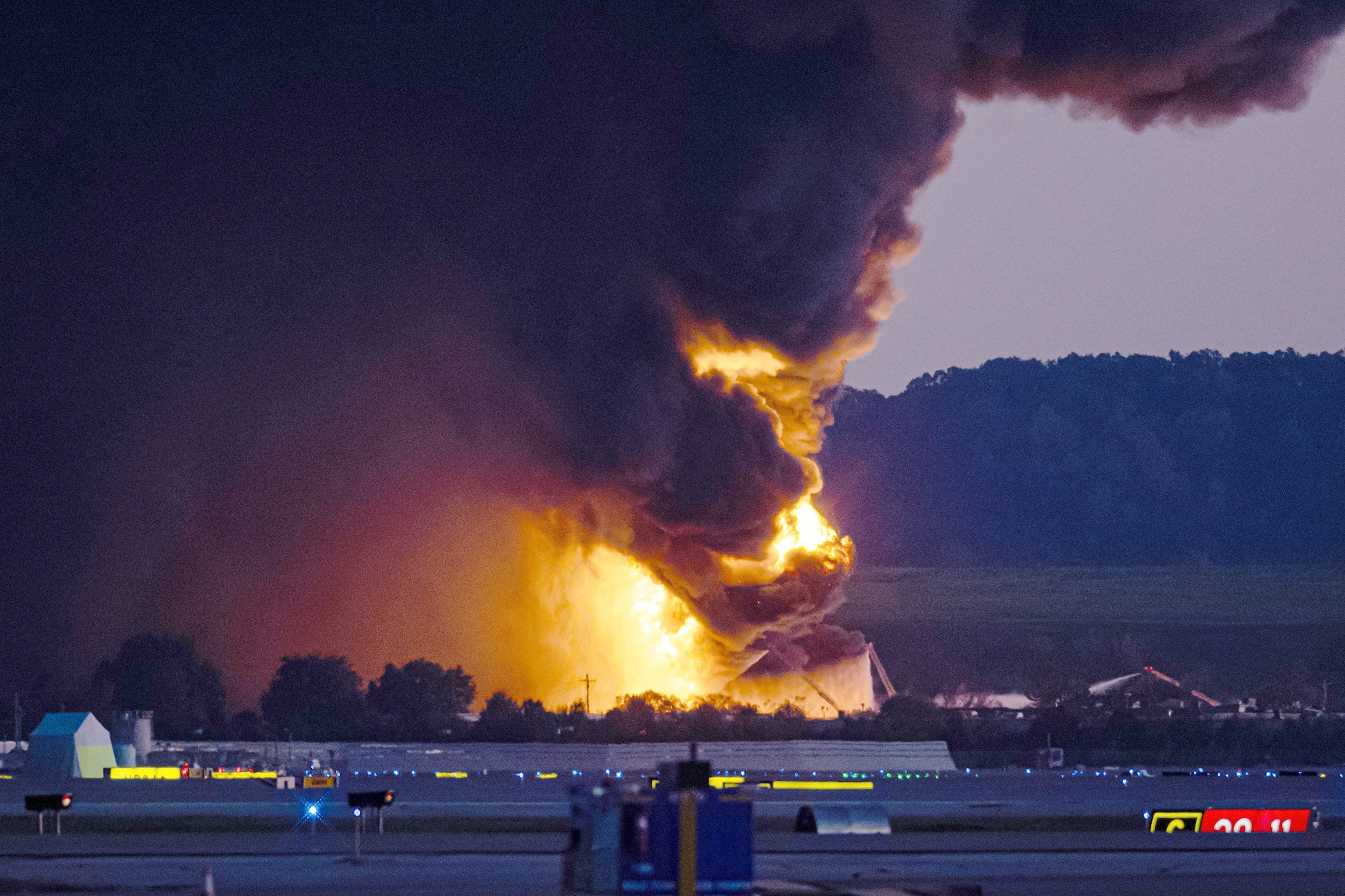
Aerial view of an airport crash site with large flames and thick black smoke.

Louisville residents described the aftermath as deeply unsettling. While no residential neighborhoods were directly affected, smoke and debris temporarily disrupted nearby traffic routes and air quality. Environmental crews are assessing potential contamination from runoff or burned fuel near the crash site.

City officials have coordinated with Louisville Water Company and environmental agencies to ensure that local water systems remain unaffected. Air monitoring stations have reported safe levels of particulate matter as of Wednesday afternoon.

The tragedy also reverberates through UPS’s global headquarters, which is based in Louisville and serves as one of the world’s largest air-freight hubs. The company released a statement expressing “profound sorrow for the loss of colleagues and community members” and pledged full cooperation with the NTSB investigation.

Transition to Recovery

Heavy smoke rises from the site of a UPS cargo plane crash near Louisville Muhammad Ali International Airport.

By late Wednesday, emergency crews had contained all fires and begun debris removal. Investigators are mapping the wreckage field, cataloging evidence, and interviewing airport personnel who witnessed the event.

Governor Beshear noted that while “hopes for additional rescues have ended,” recovery operations will continue through the week to account for those still missing. Counseling and trauma-support teams have been dispatched to assist families and first responders.

The Federal Aviation Administration will issue an interim safety advisory once preliminary findings are available. Until then, all MD-11 aircraft in the UPS fleet are undergoing internal maintenance checks, though there is no current indication of a fleet-wide issue.

Looking Ahead

A full NTSB report—including probable cause and safety recommendations—is expected within 12 to 18 months, consistent with standard investigative timelines. Aviation experts anticipate that lessons from the Louisville crash will inform future safety improvements for cargo-plane operations, especially regarding heavy-fuel loads and takeoff performance.

For the city of Louisville, the focus now turns to supporting families, rebuilding damaged businesses, and honoring those who lost their lives. Local faith communities are planning memorial services in the coming days.

As Governor Beshear concluded in his latest briefing:

“We have faced floods, storms, and hardship before, but Kentuckians always rise together. We will heal, we will rebuild, and we will remember every life lost with dignity.”


Sources

IRAN ATTACKED RIGHT NOW, PLANE WITH MORE THAN 244 ONBOARD JUST CRASH… see more Read More

National Mourning: School bus accident: 32 children lost… See more

A Local Community Mourns After School Bus Incident Involving Young Student

A local community is coming together in grief following a tragic school-related incident involving a kindergartner and a school bus, according to information shared by officials. The event occurred during a routine school transition period and was witnessed by the child’s older sibling, adding to the emotional weight felt by family members, classmates, and educators.

New Jersey School Bus Collides With Truck, Killing Student and Teacher - The New York Times

Emergency responders were dispatched to the scene immediately after the incident was reported. Despite rapid medical assistance and efforts to provide care, the child did not survive. Authorities confirmed that the sibling was not physically injured and has since been placed in a safe environment, where emotional support services are being provided.

Out of respect for the family, officials have not released the child’s name or other identifying details. Local leaders emphasized the importance of privacy during this period of mourning and asked the public to be mindful of the family’s need for space and compassion.

An Investigation Underway

Officials stated that a comprehensive review is currently in progress to understand the circumstances surrounding the incident. As part of standard safety protocol, the school bus involved has been temporarily removed from operation. The driver is cooperating fully with investigators, and no conclusions have been released at this time.

School district representatives said they are working closely with local authorities to assess what occurred and to determine whether any additional safety measures or procedural changes are necessary. They stressed that student safety remains their highest priority.

“Our focus right now is on supporting the family, the students, and the staff who have been impacted,” a district spokesperson said. “At the same time, we are committed to reviewing all aspects of this incident carefully and transparently.”

Support for Students and Families

TIL a child is 16 times safer riding to school in a school bus than in a family vehicle : r/todayilearned

In the days following the incident, the school district has taken steps to prioritize emotional well-being. Grief counselors, school psychologists, and mental health professionals have been made available to students, teachers, and staff members.

For younger children, counselors are using age-appropriate approaches to help them express emotions, ask questions, and feel reassured about their daily routines. Educators have been advised to maintain structure while remaining flexible, recognizing that children may respond to grief in different ways.

Staff members, many of whom knew the student personally, are also receiving support. School administrators acknowledged that educators often carry the emotional weight of their students’ experiences, and providing care for staff is essential to maintaining a healthy learning environment.

Parents have expressed appreciation for the district’s communication and outreach. Several noted that timely updates, clear messaging, and access to support services have helped families feel informed and supported during a difficult period.

“This kind of loss affects everyone,” one parent said. “Knowing that the school is focused on emotional care as much as procedures makes a difference.”

Community Response and Solidarity

1 student, 1 teacher dead after school bus filled with children ripped apart in collision with dump truck – New York Daily News

Beyond the school grounds, the broader community has responded with an outpouring of compassion. Residents have gathered quietly to leave flowers, notes, and messages of support in designated areas, honoring the child’s memory while respecting the family’s privacy.

Faith leaders, community organizations, and local officials have echoed messages of unity and care. Several have encouraged residents to check in on one another, particularly families with young children who may be struggling to understand the situation.

Local leaders described the incident as a profound tragedy that has touched the entire community. In public statements, they emphasized the importance of kindness, patience, and mutual support during times of collective grief.

“Moments like this remind us how interconnected we are,” one official said. “Our strength as a community comes from how we care for one another, especially when words fall short.”

Reflecting on Safety and Responsibility

2 dead, dozens hurt when school bus collides with dump truck in Mount Olive Township - ABC7 New York

While grief remains the immediate focus, the incident has also prompted reflection on student safety and transportation practices. School officials reiterated that student safety is their highest priority and that ongoing evaluation is a necessary part of maintaining trust.

They noted that school transportation systems involve multiple layers of policy, training, and oversight, all designed to protect students during daily routines. When an incident occurs, reviewing those systems thoroughly is essential, both to understand what happened and to prevent future tragedies.

Officials emphasized that any findings from the investigation will be used constructively. Recommendations, if made, will inform training, procedures, and communication moving forward.

“This review is about learning and improvement,” the district spokesperson said. “It’s about honoring the child’s memory by doing everything we can to strengthen safety for all students.”

Looking Ahead With Care

As the investigation continues, community members are being reminded that healing takes time. Grief does not follow a set timeline, especially when it involves children and families deeply connected to schools.

Authorities and school officials have encouraged anyone affected by the incident to seek support, whether through school resources, community organizations, or trusted individuals. They also urged residents to be mindful of how conversations, social media posts, and speculation can impact those who are grieving.

For now, the community remains focused on honoring the young life lost and ensuring that the family receives care, compassion, and respect. While questions remain, leaders have emphasized that the priority is support, understanding, and unity.

In moments of loss, communities often rediscover the importance of connection. As one educator reflected, “We can’t undo what happened, but we can choose how we care for each other now. That matters.”

The road ahead will involve reflection, learning, and remembrance. And as this community moves forward, it does so together — holding space for grief, offering support, and reaffirming its commitment to the safety and well-being of every child.

National Mourning: School bus accident: 32 children lost… See more Read More

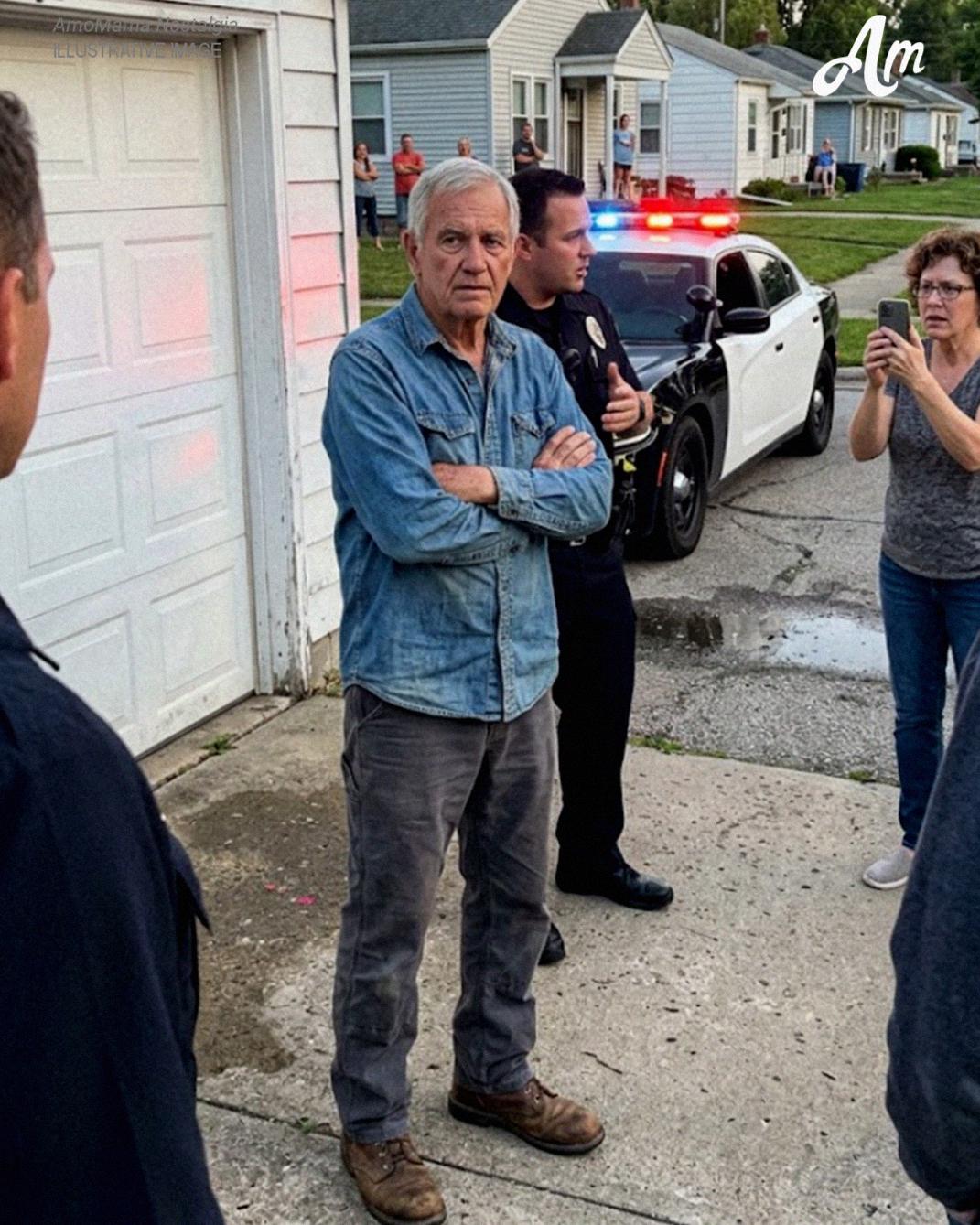
Neighbors Called the Authorities on My 72-Year-Old Dad for Getting Rid of Dogs for Money – When We Opened His Garage, the Officer Was Left in Tears

The morning my neighbors called the authorities on my 72-year-old dad, they were convinced he’d been taking in dogs and “getting rid of them” for money. The whole street showed up to watch. When the garage door started to lift, no one was ready for what was inside.

I’m Pete, 42. I’m married, blessed with two wonderful kids, and live three hours away. Every six months or so, I drive back to my hometown and stay with my dad for a few days.

My dad, Walter, has lived alone since my mom passed away 26 years ago. He never remarried. Never sold the house. And never changed the yellow curtains Mom picked for the kitchen, even after the sun faded them pale as old butter.

My dad, Walter, has lived alone since my mom passed away 26 years ago.

Back then, I told myself Dad was managing fine, and maybe that was the lie I needed most.

Dad was always moving. He’d be up before daylight. Boots on. Coffee down. And fixing fences for neighbors who barely thanked him.

Then there was the garage. It had been off-limits for as long as I could remember.

As a kid, I heard barking from behind that side door now and then. And suddenly, it would go quiet. Dad would come out smelling like sawdust and dog shampoo and say, “Leave that one be, Pete.”

I always did. Part of it was obedience. Part of it was fear.

“Leave that one be, Pete.”

When I was nine, a pair of loose dogs chased me halfway down the street. They didn’t touch me, but I still remember my lungs burning and the slap of my sneakers on hot pavement. Ever since, barking behind a closed door made my shoulders lock up.

Dad knew it. He never pushed.

So I made the garage a rule: don’t go near it, don’t ask.

That rule followed me into middle age.

On my visits home, I’d see Dad disappear into that garage with bags from the feed store or blankets from town. Sometimes I’d hear nails tapping on concrete, a low whine, and the scrape of a bowl across the floor. Then, by evening, nothing.

Sometimes I’d hear nails tapping on concrete.

I didn’t ask where the dogs came from or where they went. I never bothered for years.

Last Thursday morning, Dad was standing at the sink when somebody started shouting from out front.

“Walter, open the garage! Now! We know what you’ve been doing!”

Dad frowned toward the window, then set his mug down and said, “Who on earth is calling for me this early?”

By the time I stepped onto the porch behind him, our neighbor Mrs. Donnelly was already at the curb with her phone held chest-high, recording as if she’d been waiting her whole retirement for this moment.

Mr. Grayson stood beside her. Mrs. Perez hovered near her mailbox, twisting her fingers together and watching the driveway.

I didn’t ask where the dogs came from or where they went.

A county cruiser sat crooked near the curb. Two uniformed officers stood by the gate, one younger, one older with deep lines around his mouth. The younger one did the talking.

Dad walked down the porch steps in his work boots and flannel shirt.

Mrs. Donnelly lifted her phone higher. “Tell them what you’ve been doing in that garage, Walter.”

Dad didn’t look at her. “Morning to you too, Mrs. Donnelly.”

Grayson muttered, “Don’t charm your way out of it, Walter. Admit it.”

“Tell them what you’ve been doing in that garage, Walter.”

The younger county officer cleared his throat. “Sir, we’ve had multiple reports. Neighbors claim you’ve been bringing dogs home from shelters, and the animals come in but are never seen again. Some believe money may be involved.”

Dad let out a short breath through his nose. “That’s the story now?”

Mrs. Donnelly snapped, “We all see the same thing, Walter.”

Mrs. Perez spoke up quietly. “I just said the barking would stop. I never said…” She trailed off when Mrs. Donnelly shot her a look.

I looked at Dad and found a flicker of doubt moving through me. I visited twice a year. I slept down the hall from that garage and never once opened the door.

“I just said the barking would stop.”

The older county officer stepped forward. “Walter, we need access to the garage.”

“Do you have the paperwork?” Dad asked.

The officer held up a folded sheet. “We do.”

Dad nodded, reached into his pocket, pulled out his keys, and started toward the side of the house. Nobody spoke while he walked. The sound of those keys was the only thing I heard until Dad reached the garage and said, “All right, then. Watch close.”

The door began to lift.

A strip of shadow opened first, then a band of light.

“Walter, we need access to the garage.”

The younger officer stepped forward, ready for something ugly. Mrs. Donnelly leaned around Grayson to get a better angle with her phone.

The opening widened. The younger officer took two steps inside… and stopped.

The older one moved in behind him. Then he just stood, startled the way people get when what they expected and what they found can’t fit in the same mind at once.

There were no cages. No filth. No clutter.

Just rows of wooden sleeping spaces, built by hand and sanded smooth, each one wide enough for a dog to stretch out comfortably. Every space had a folded blanket, a water bowl, a food dish, and a little framed photo set carefully against the back wall.

The younger officer took two steps inside… and stopped.

Above each opening was a name painted in simple black letters, and beneath it a date.

Daisy. 2004. Ranger. 2008. Millie. 2011.

It didn’t feel like a garage. It felt like a room built for dignity.

At the back stood a large board covered in photos. Dozens of dogs. Big dogs, little dogs, gray-faced old dogs, and shy-eyed mutts. Under each photo, in Dad’s neat block handwriting, were little notes:

“Adopted after 11 months.” “Waited at shelter 417 days.” “Stayed here till the end.”

These weren’t records. They were what tenderness looks like when it becomes routine.

The whole thing was so gentle it made the accusation outside feel filthy.

It didn’t feel like a garage.

The younger officer whispered, his eyes glassy, “These aren’t missing dogs.”

Dad stood behind me and answered in the same plain voice he used to ask if I wanted toast. “Nobody wanted the old ones.”

That landed harder. The older officer took off his hat. Outside, the yard had gone so quiet.

Then Dad added, without raising his voice: “And I wasn’t going to let those poor creatures go without someone sitting with them at the end.”

I kept walking as the room kept unfolding. There was a shelf in the corner holding collars, tags, and worn toys, each one labeled in masking tape with a name and year.

A rubber duck. A frayed rope. A tennis ball gone soft with teeth marks. The kind of things you keep only when love has nowhere else to go.

“These aren’t missing dogs.”

On the workbench sat a stack of notebooks tied with twine. I picked up the top one and opened it:

“Rosie ate half her supper. Hand-fed the rest.

Benny likes the blue blanket better than the red one.

Today, I sat up with Louie past midnight. Didn’t want him by himself.

Tucker had a good morning. Porch sun for 20 minutes.

I stayed with Duke until he settled.”

I pressed my thumb against the paper and couldn’t bring myself to flip the page right away.

Didn’t want him by himself.”

Twenty-six years of this. Dogs nobody picked. My father did it alone while I showed up twice a year with good intentions.

“Why didn’t you tell me, Dad?” I asked.

He shrugged once. “Wasn’t for telling.”

“You built all this by yourself?” I turned to face him.

Dad looked around the room as if I’d asked who painted the sky. “Took time, son… that’s all.”

Behind me, the older officer asked carefully, “Sir, have you been working with shelters directly?”

“A few,” Dad replied. “I take the dogs people pass over. The old ones… with cloudy eyes, stiff hips, and medicine schedules nobody wants to learn.”

The officer pressed his lips together and looked down, wiping his eyes.

“Why didn’t you tell me, Dad?”

“And the money?” Grayson called from the doorway, sounding smaller now.

Dad turned just enough for his voice to carry. “The shelters ask for a fee sometimes. I pay it.”

Nobody spoke after that. Silence did to that crowd what noise never could.

I kept walking until I reached the back corner, and that was where the last part of it was waiting. One sleeping space stood empty. The blanket was folded more neatly. A small lamp hung over it. On the shelf above it was a framed photo, but not of a dog.

My mother.

She was smiling the way she did in the kitchen, chin tipped down, flour on one cheek. I stared at that picture until my eyes blurred.

On the shelf above it was a framed photo, but not of a dog.

“Dad…”

He came up beside me. “After your mom passed away, the house got too quiet, Pete.”

That was it. And every year, I told myself Dad was simply used to being alone, collapsed like rotten wood.

The older officer wiped both eyes and stepped back outside. Mrs. Donnelly lowered her phone all the way. Mrs. Perez whispered something under her breath. Grayson didn’t say a word.

I turned to Dad. “You stayed up with them? All these years?”

He nodded. “Some of them got restless at night.”

“After your mom passed away, the house got too quiet, Pete.”

“And you kept every name.”

“Somebody should, son,” Dad murmured. “Those old dogs… they just needed to know love was still out there. That kindness isn’t gone just because the world got too busy to notice them.”

“You couldn’t mention any of this to your son?”

Dad gave me the look he used when I was a teenager being dramatic over a flat tire. “You never asked, Pete.”

That one was fair. And fair can sting worse than mean ever could.

The officers spoke quietly with Dad for a few more minutes, their tone completely changed. No suspicion was left in it. The older one said he’d make that clear in his report. The younger one looked at one of the empty spaces and asked Dad, “You do this all yourself?”

“Mostly,” Dad answered.

“Those old dogs… they just needed to know love was still out there.”

***

Outside, Mrs. Donnelly finally found her voice. “Walter, I didn’t know… I’m… I’m extremely sorry…”

Dad didn’t rescue her from that. He just looked at her.

Mrs. Perez stepped forward. “I should’ve said something sooner. I had a feeling it wasn’t…” Her voice thinned out.

Grayson cleared his throat and stared at the grass. “I was wrong.”

Dad nodded once. “Yes, you were.”

There was no meanness in it. That made it land harder.

“Walter, I didn’t know… I’m… I’m extremely sorry…”

The vehicles pulled away. Neighbors drifted back to their porches. Dad went back into the garage, picked up a folded towel, and started wiping a water bowl as though he had a normal morning to get back to.

“Dad…”

He didn’t look up. “Yeah?”

“I’m sorry.”

He set the bowl down and faced me. “For what, son?”

“For not asking. For keeping my distance from that garage door instead of trying to understand what was behind it.”

Dad’s face softened around the eyes. “You were a kid when that started.”

“I’m not a kid now.”

Dad let that sit. Then he said, “You’re here now.”

Those words nearly broke me.

“You were a kid when that started.”

I stayed in the garage after Dad went inside. I walked every row. Read every name. And opened the notebooks and kept reading until the pages blurred.

One dog liked old jazz. One only ate if Dad sat nearby. One small guy had arrived so frightened he slept in a toolbox for three days before coming out.

Dad had written it all down, like each life deserved a witness… noting where the ones who passed peacefully were buried at the pet cemetery nearby, and already planning his next trip to bring home dogs the world had overlooked.

When Dad came back with two grilled cheese sandwiches, I was standing by the photo board with tears drying on my cheeks. He handed me a sandwich. We ate side by side, looking at the wall.

One small guy had arrived so frightened he slept in a toolbox for three days.

“How long were you planning to do this alone?” I finally asked.

Dad chewed and swallowed. “Till I couldn’t.”

“I’m not going back tomorrow.”

That got his attention. “You have work.”

“I’ll move things around, Dad.”

“You have a family, Pete.”

“My wife will be the first one to tell me I’m staying,” I replied firmly.

Dad looked at me for a long second.

“You have a family, Pete.”

“I can help you set this up properly,” I added. “Make contacts. Build a better intake area. Talk to the shelters myself. You shouldn’t be carrying all of it alone anymore.”

Dad glanced at Mom’s photo, then back at me. “You sure?”

I set the sandwich down. “Yeah. I’m sure.”

***

The next morning, I pulled in with lumber stacked in the truck. Dad came into the garage and found me kneeling beside one of the sleeping spaces, holding a drill.

“Just making room, Dad… in case one more furry soul needs a place.”

He stopped in the doorway and nodded once, slow and full, the way a man nods when something turns out to be exactly what he needed.

Turns out the dogs were never disappearing. They were loved.

Turns out the dogs were never disappearing.

Neighbors Called the Authorities on My 72-Year-Old Dad for Getting Rid of Dogs for Money – When We Opened His Garage, the Officer Was Left in Tears Read More

My Former Teacher Embarrassed Me for Years – When She Started on My Daughter at the School Charity Fair, I Took the Microphone to Make Her Regret Every Word

School was the worst stretch of my life. I tried so hard, but one teacher made sure I never left her class smiling. Even now, I don’t understand what she gained from embarrassing me in front of everyone.

Mrs. Mercer was the teacher. She mocked my clothes. Called me “cheap” in front of everyone like it was a fact worth recording. And once, she looked right at me and said, “Girls like you grow up to be broke, bitter, and embarrassing!”

One teacher made sure I never left her class smiling.

I was just 13. I went home and didn’t eat dinner that day. I didn’t tell my parents because I was afraid Mrs. Mercer would give me an F in my English class. And to make matters worse, some classmates were already teasing me for my braces.

I didn’t want to make it any bigger than it already was.

The day I graduated, I packed one bag and left that town. I told myself I was never going to think about Mrs. Mercer again. Years later, life brought me somewhere new. I built something steady there. A home. A life. A future.

So why, all these years later, was her name back in my life?

It started with Ava coming home quiet. My daughter is 14, sharp as a tack, and she always has something to say about everything. So when she sat down at the dinner table and just pushed her food around, I knew something was wrong.

I was afraid Mrs. Mercer would give me an F in my English class.

“What happened, sweetie?” I urged.

“Nothing, Mom. There’s this teacher.”

I set down my fork. Ava told me, in pieces, about a teacher at school who’d been picking at her in front of everyone. Calling her “not very bright” and making her feel like a punchline.

“What’s her name?”

Ava shook her head. “I don’t know yet. She’s new. Mom, please don’t go to school.” Her eyes widened. “The other kids will make fun of me. I can handle it.”

“The other kids will make fun of me.”

Ava couldn’t handle it. I could see that just by looking at her.

I sat back. “Okay… not yet.”

But I was already certain of one thing: this felt too familiar. And I wasn’t going to sit still for long.

I decided to meet this teacher myself. But the very next day, I was diagnosed with a bad respiratory infection and put on strict bed rest for two weeks. My mother drove up that same evening with a casserole and a look that told me not to argue.

She took over everything: Ava’s lunches, the school drop-offs, and the house. She was steady and warm in that way she always was, and I should’ve been grateful. I was.

I decided to meet this teacher myself.

But lying in bed while Ava went off every morning to face that classroom made me feel helpless in a way that no illness ever could.

“She okay?” I’d ask my mother every afternoon.

“She’s okay,” Mom would say, smoothing my covers. “Eat something, Cathy.”

I ate, waited, and watched the days tick by. And I’d made myself a promise: the second I was well enough to stand on my feet, I was going to deal with this teacher.

But lying in bed while Ava went off every morning to face that classroom made me feel helpless.

Then the school announced a charity fair, and something shifted in Ava.

She signed up before I could blink, and that same night, I found her at the kitchen table with a needle, thread, and a pile of donated fabric she’d gotten from the community center.

“What are you making?” I asked.

“Tote bags, Mom!” she said, not looking up. “Reusable ones. So every dollar goes straight to families who need winter clothes.”

Then the school announced a charity fair, and something shifted in Ava.

Ava stayed up late every night for two weeks. I’d come downstairs at 11 and find her there, squinting under the kitchen light, stitching careful, even seams. I told her she didn’t need to push so hard.

She just smiled and said, “People will actually use them, Mom.”

I watched my daughter work those nights and felt proud. But I couldn’t stop wondering who exactly was running that charity fair, and who was making my daughter’s life miserable at school.

I found out on a Wednesday. The school sent home a flyer with the fair details, and there at the bottom, under “Faculty Coordinator,” was a name I hadn’t seen written down in over 20 years.

Mrs. Mercer.

I watched my daughter work those nights and felt proud.

I read it twice. Then I sat down at the kitchen table and stayed very still for about a full minute.

I didn’t guess. I checked the school website from my bed. The moment her photo loaded, my stomach dropped.

It was Mrs. Mercer.

She hadn’t just come back into my orbit. She was in my daughter’s classroom, in the new town we’d built our lives around. She was the one calling Ava “not very bright.” She was the one who’d been doing to my child what she’d done to me at 13, and she’d probably been doing it for years without anyone saying a word.

I folded that flyer and put it in my pocket. I was going to that fair, and I was going to be ready.

She was the one who’d been doing to my child what she’d done to me at 13.

***

The school gym smelled of cinnamon and popcorn the morning of the fair. Folding tables lined every wall, covered in handmade crafts and baked goods. The room buzzed with cheerful children and parents.

Ava’s table was near the entrance. She’d arranged 21 tote bags in two neat rows, with a small handwritten card that read: “Made from donated fabric. All proceeds go to winter clothing drives! :)”

Within 20 minutes, people were lined up at her table. Parents held the bags up and turned them over, nodding with genuine appreciation. Ava was beaming.

I stood a few feet back, watching her, and for a moment I thought: maybe it’ll be fine. Maybe today is just a good day.

Within 20 minutes, people were lined up at her table.

But my eyes kept scanning the crowd for the one face I’d dreaded all those years. As if on cue, Mrs. Mercer appeared, moving toward us, and I knew the good part of the morning was almost over.

She looked older. Her hair thinner, streaked with gray. But the posture was the same. The same tight shoulders. The same way of walking into a room as if she’d already decided her opinion of everything in it.

Mrs. Mercer’s eyes landed on me, and she paused.

“Cathy?” she said, a flicker of recognition crossing her face.

She looked older.

I gave a small nod. “I was already planning to meet you, Mrs. Mercer. About my daughter.”

“Daughter?”

I turned and pointed toward Ava.

“Oh, I see!” Mrs. Mercer said, stopping at Ava’s table.

She picked up one of the bags and held it between two fingers as though she’d found it on the street.

Mrs. Mercer leaned in slightly, just enough for me to hear: “Well. Like mother, like daughter! Cheap fabric. Cheap work. Cheap standards.”

Then she straightened, smiling as if nothing had happened.

“I was already planning to meet you, Mrs. Mercer.”

Mrs. Mercer set the bag back down without looking at her, glanced at me, and smiled before walking away, muttering that Ava “wasn’t as bright as the other students.”

I watched her go. I saw my daughter staring down at her table, hands pressed flat on the fabric she’d spent two weeks making by hand. And something I’d been sitting on for two decades finally stopped sitting.

Someone had just finished announcing the next event and set the microphone down. Before I could second-guess it, I stepped forward and picked it up.

Something I’d been sitting on for two decades finally stopped sitting.

“I think everyone should hear this,” I said into the microphone.

A few heads turned. Then more.

The room quieted almost immediately. Behind me, Ava had gone completely still. Across the room, Mrs. Mercer had stopped walking.

“Because Mrs. Mercer,” I continued, “seems very concerned about standards.”

A few heads turned toward her. She didn’t move. And I hadn’t even gotten to the part that mattered yet.

“I think everyone should hear this.”

“When I was 13,” I added, “this same teacher stood in front of a classroom and told me that girls like me would grow up to be ‘broke, bitter, and embarrassing.’”

A ripple moved through the crowd.

“And today, Mrs. Mercer said something very similar to my daughter.”

Heads turned. Not just toward me, toward Ava. Toward the table. And toward the carefully made tote bags that were still sitting there, waiting.

Heads turned. Not just toward me, toward Ava.

I walked back to the table, picked one up, and held it out so the whole room could see exactly what we were talking about.

“This,” I said, “was made by a 14-year-old girl who stayed up every night for two weeks, using donated fabric, so that families she’s never met could have something useful this winter.”

The room was so quiet I could hear the popcorn machine in the corner.

“She didn’t do it for praise,” I revealed. “She didn’t do it for a grade. She did it because she thought it would help.”

“She didn’t do it for praise.”

Have you ever watched a room full of people realize they’re on the wrong side of something and quietly decide to correct it? That’s what I saw happen in real time. Parents straightened up. A few people glanced at Mrs. Mercer.

Then I asked another question: “How many of you have heard Mrs. Mercer speak to students that way?”

For a second, nobody spoke.

Then a hand went up. A student near the back, barely hesitating. Then a parent on the left side of the room. Then another. Then three more in quick succession, one after the other.

Mrs. Mercer stepped forward. “This is completely inappropriate…”

“How many of you have heard Mrs. Mercer speak to students that way?”

But a woman near the front turned around and said calmly, “No. What’s inappropriate is what you said to that girl.”

Another parent followed: “She told my son he wouldn’t make it past high school. He was 12.”

A student added: “She told me I wasn’t worth the effort.”

It wasn’t chaos. It was just people, one at a time, deciding they were done staying quiet.

And at that moment, it wasn’t just my story anymore. It was everyone’s, and there was nothing Mrs. Mercer could do to take the microphone back.

“She told me I wasn’t worth the effort.”

“I’m not here to argue,” I spoke again. “I just wanted the truth to be heard.”

Then I looked directly at Mrs. Mercer.

“You don’t get to stand in front of children and decide who they become.”

Beads of sweat formed on her temples.

But I wasn’t done. Because the part that was really for me, the part I’d been carrying since I was 13, was still to come.

“I just wanted the truth to be heard.”

“You told me what I’d become,” I said, looking right at Mrs. Mercer. “And you were right about one thing. I’m not rich. But that doesn’t define my worth. I raised my daughter on my own. I worked hard for everything I have. And I don’t tear others down to feel better about myself.”

A few quiet murmurs followed.

I held up the tote bag one more time. “This is what I raised. A girl who works hard. Who gives without being asked. Who believes that helping people matters.”

I looked at Ava. She was watching me with her shoulders back and her eyes wide and bright. I took one final step forward.

“Mrs. Mercer, you spent years deciding what I would become. You were wrong!”

“I don’t tear others down to feel better about myself.”

The room was so still you could’ve heard a pin drop. Then the first pair of hands came together, and the rest of the room followed.

The applause started slowly. I handed the microphone back and turned around.

Ava wasn’t frozen anymore. She was standing taller than I’d seen her stand in weeks, chin up, shoulders square, and eyes bright with relief.

As if on cue, karma made its appearance.

Across the room, the principal was already moving through the crowd.

As if on cue, karma made its appearance.

“Mrs. Mercer,” he said. “We need to talk. Now.”

No one defended the teacher. The crowd parted to let them through, and Mrs. Mercer walked away without the authority she’d walked in with.

By the end of the fair, every single one of Ava’s bags was gone.

A few parents shook her hand. A couple of kids told her the bags were really cool. She sold out before any other table did.

Mrs. Mercer walked away without the authority she’d walked in with.

***

That evening, as we packed up, my daughter looked at me for a long moment.

“Mom. I was so scared.”

I smiled. “I know, baby.”

Ava hesitated, turning a small scrap of leftover fabric over in her hands.

“Why weren’t you?”

I thought about a 13-year-old me, and that entitled teacher with curly hair and glasses.

“Mom. I was so scared.”

“Because I’ve been scared of her before. I just wasn’t anymore.”

Ava leaned her head against my shoulder. I held on.

Mrs. Mercer tried to define me once. She doesn’t get to define my daughter.

“I’ve been scared of her before. I just wasn’t anymore.”

My Former Teacher Embarrassed Me for Years – When She Started on My Daughter at the School Charity Fair, I Took the Microphone to Make Her Regret Every Word Read More